

Supervision Circles
At Shelterwood Collective, we believe that supervision is not only a requirement for licensure, but a vital relational practice — one that shapes how clinicians learn to think, feel, and work in the presence of others.
Our Supervision Circles are intentional, intimate, and accessible spaces for associate-level therapists seeking high-quality supervision within a communal learning environment. These circles are designed to support clinical development, ethical discernment, and professional identity formation through collaborative, intergenerational mentorship.
A Communal Pathway to Licensure
Supervision Circles offer a more affordable, community-oriented pathway to licensure while maintaining the rigor, responsibility, and ethical clarity required for this stage of practice. Each circle is facilitated by a seasoned therapist who is also a Washington State–approved clinical supervisor.
All participants are required to maintain an individual primary supervisor and receive at least one hour of individual supervision per month. Our Supervision Circles are intended as a valuable supplement—offering a distinctly collaborative and reflective counterbalance to one-on-one supervision.
Each circle is capped at four practitioners to ensure depth, continuity, and meaningful participation. Participants may count one hour of each group meeting as a direct supervision hour toward licensure requirements.
Group supervision becomes more than oversight—it becomes a living classroom. Our circles support:
Clinical case consultation and ethical decision-making
Development of clinical voice, confidence, and discernment
Exposure to multiple perspectives and therapeutic orientations
Increased capacity to work with complexity, countertransference, and uncertainty
A felt sense of belonging and professional companionship during the licensure process
These groups are intentionally structured to be relational, generative, and grounded—rather than evaluative or performative.
Meet Solomon
We are honored to partner with Solomon Chan, a licensed psychotherapist, educator, and Washington State–approved clinical supervisor. Solomon approaches supervision as a space for developing clinical voice and judgment, and supporting associate clinicians in becoming more fully themselves in the therapy room.
He draws from his history of therapeutic work in academic settings (facilitating multicultural counseling groups for Dr. Caprice Hollins, and contribution along with others toward Dr. Roy Barness’s work of contemporary of psychoanalysis as transcultural modality), community mental health (having served as therapist, supervisor, and program manager with diverse populations spanning child/play therapy to school based counseling to family counseling to individual adult psychotherapy), inpatient psychiatric hospital (as a mental health technician and therapist providing CBT/DBT based group therapy, case management and social work, and care for acute mental care crises ranging from manifestations of self harm, personality disorders, substance, abuse, and psychosis), and private practice (primarily with adults who seek depth work).
His work is grounded in interpersonal, narrative, cross-cultural, and psychoanalytic traditions, with particular attention to the unconscious, transference and countertransference, attachment and attunement, and culture. Solomon brings a thoughtful, steady presence to supervision, holding learning as a collaborative, intergenerational, and cross-cultural process rooted in reflection, ethical care, and deep respect for where each clinician is in their development.
Container
This Supervision Circle meets in person at Shelterwood Collective or virtually (as decided by the majority of the participants) 10:00-11:30 am every other Wednesday beginning April 15th.
Each group is capped at four participants, with one hour of each meeting counting as direct supervision.
These groups are ideal for associates who are seeking:
High-quality supervision within a small, consistent cohort
A collaborative learning environment alongside peers
Mentorship from experienced clinicians who value relational depth
A supervision experience that supports both competence and humanity
Exchange
$150/month
Supervision fees will be processed alongside your monthly membership fee on the 20th of each month via Plooto.
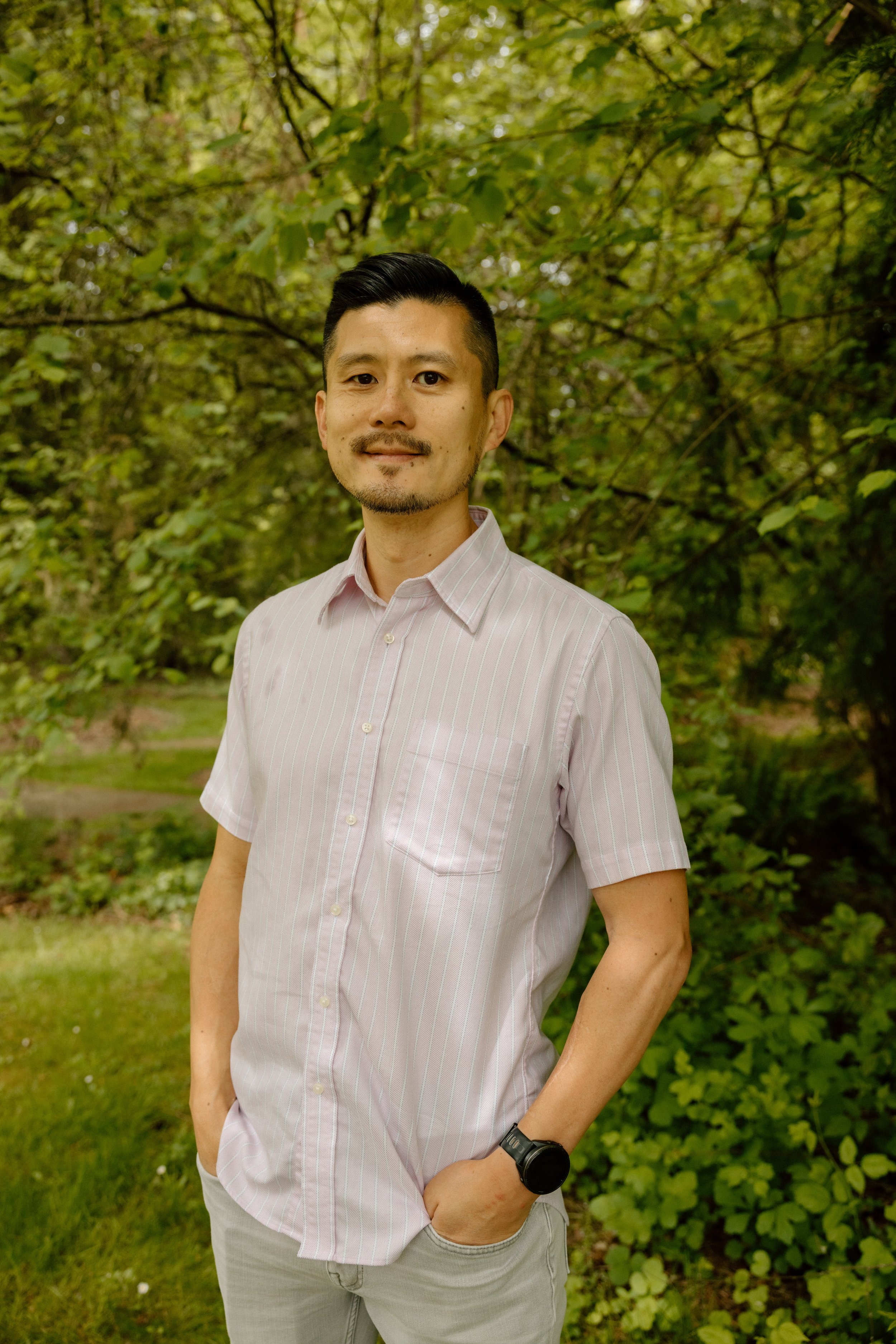
Solomon Chan
Psychotherapist & Clinical Supervisor
(he/him)
My goal is for your supervision to be a rewarding and positive experience, providing a level of support around your clinical development that enables you to build confidence as well as skills. My hope is that you will look forward to supervision as a positive and containing experience. As providing therapy to people can be emotionally and physically exhausting, overwhelming, and positively powerful; our aim will be to develop a containing environment within which you will feel comfortable to process your experience within your therapy with clients as well as your experience of BEING a therapist.
My belief is that a supervisor’s role is to support the supervisee in exploring all areas of professional development. This can include managing your business practice and ethical/legal requirements, transference around cases, the impact of clinical work on your personal life and family, exploring cultural norms and differences, and developing the capacity to sit with difficult emotions and reflect on all aspects of cases. Supervision will not be your psychotherapy, although we may feel there will be insights that we may personally benefit from, much like what often can happen as we sit with our clients - so we will endeavor to frame our process with mindful attention how it might serve the therapeutic work and ultimately our clients.
Sometimes it is helpful to process ways that your personal life or history are affected by and affecting your clinical work. The degree to which you share your personal life and history is entirely up to you. I encourage the process of exploring the connection between personal life and clinical work, however if either person in the supervisory relationship feels that the focus between personal and professional becomes unbalanced, either party may initiate exploring additional supports that may be recommended (I highly encourage your own engagement with consistent psychotherapy). In group supervision, we will benefit from a small community that can shed more light and perspective than is limited by a dyad, and so we can lean on group supervision as a collaborative process of sharpening and spurring each other on.
Just as with all relationships, the supervisory relationship is a growing and always-changing one. Please know that I am open to discussing our supervisory relationship at any point in time and value your feedback and reflections on the supervisory process. Ultimately, this relationship is to support your growth as a therapist and therefore it is very important that if you, at any time, do not feel that this is happening, please bring that to my attention.
Learn more about Solomon