
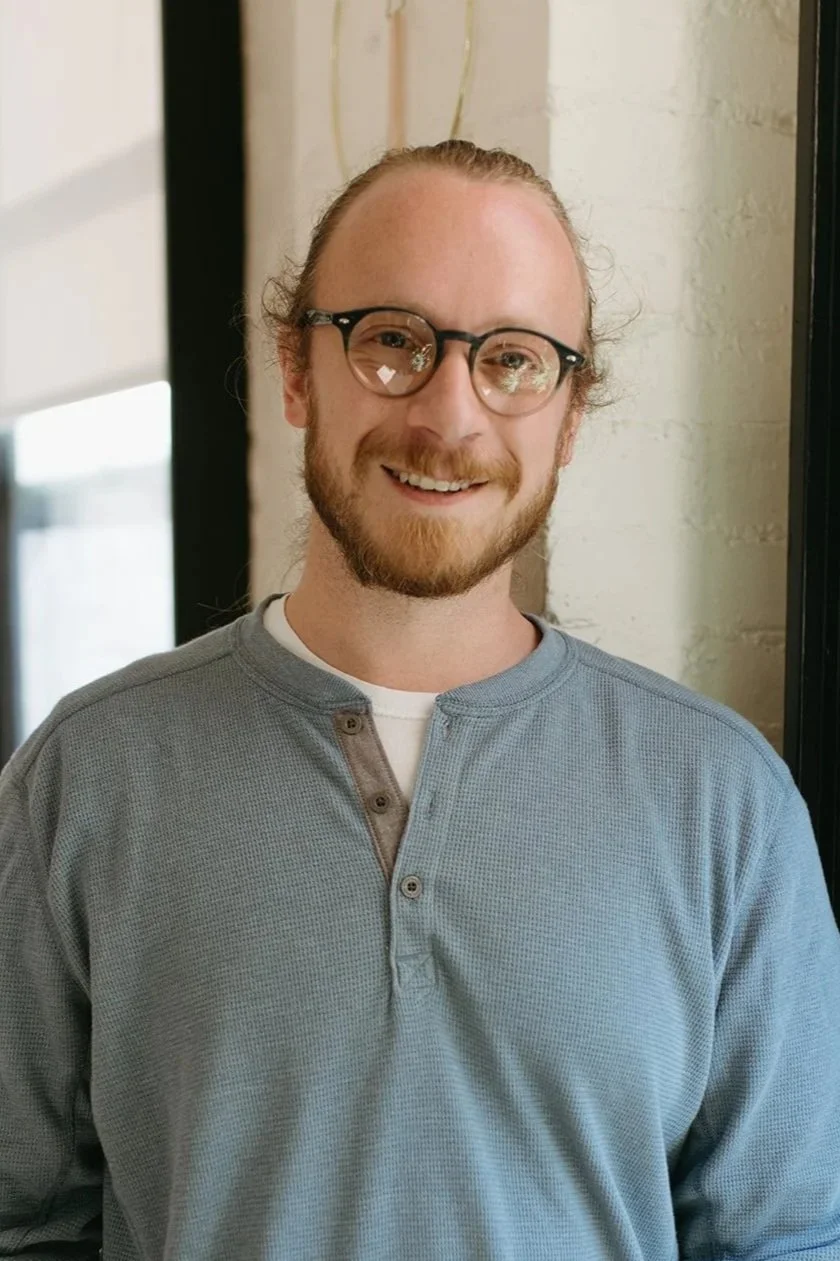
Licensed Mental Health Counselor
(he/him)
I have opened up a few more spaces in my private practice for 2026! Appointments are available during the day on Mondays and Wednesdays. Reach out for a free 50-minute consultation! I am IN NETWORK with Premera, Lifewise, and Regence.
Given the turbulent times in which we find ourselves, many of my clients have been comforted to learn about my ancestry. My grandparents were German Jewish Holocaust refugees who emigrated to the United States. Regardless of your personal faith or ethnic background, we all encounter the harsh realities of discrimination and displacement. Coping with the current political and economic strife is a challenge we all must face together.
WELCOME
Hello! Welcome, and thank you for being here. While it’s certainly possible that you enjoy reading therapist profiles just for fun, it’s more likely that you are here looking for help of some kind. Without being indifferent to your suffering, please allow me to say, congratulations! It can be uncomfortable to admit that you are not feeling your best and to decide to ask for help. You can be proud of yourself for making it this far.
WHO I AM
I have over ten years of experience as a counselor. I earned my Master’s degree at Gonzaga from 2013-2015 and then worked in school settings for several years. During the pandemic, I made the pivot to community mental health counseling. And now I work both in community mental health and private practice. I have advanced training in trauma-focused interventions and assessment of attachment - which has become my true passion. I often present at state conferences and provide professional development on attachment, trauma, parenting, and child development. Prior to finding my calling as a counselor, I worked in energy and finance after graduating from Harvard in 2011 where I studied psychology and neuroscience. Outside of work, I spend as much time as I can with my family and enjoying the great outdoors.
WHOM I SERVE
I serve clients of all different identities, faiths, backgrounds, and nationalities. I am proud to ally with the LGBTQIA+ community. And increasingly, I have found that members of the Jewish community often like to connect with a Jewish therapist like myself.
As you read this, you may be suffering acutely and have a clear idea that something is wrong. Or, like many, maybe you can tell that you aren’t quite living your best life, but you just can’t put your finger on why. Are you dissatisfied with your job or having trouble sleeping? Are you stuck in the same old patterns in your relationships and personal life - rehashing the same arguments over and over again? I’m willing to bet you need someone who is going to really listen and understand what you’re going through, even if you don’t fully understand it yourself. Clients say that doing therapy with me feels like connecting with an old friend, someone who really gets them. I show up sincerely and authentically. I want you to know that I care, and I care enough to be blunt and honest - even when others won’t be.
CONTACT ME
Now that you’re here, your next steps are simple (though perhaps not so easy). You can contact me either by phone or email; please send me a message with your name and contact information to let me know you are interested in a consultation. Then, I will get back to you within a few days. I’ll tell you a little bit about myself, you can tell me a little bit about yourself, and we’ll iron out some key details - like making sure that our schedules work out, figuring out billing and insurance (therapy can be expensive), and ensuring this is a good fit for you. This can be a short conversation, or, if you are interested, we can do a full trial session free of charge. I will set aside the whole hour for you so we have plenty of time to get acquainted.
GETTING STARTED
While every client is unique and no two sessions are exactly alike, there are some things you can reliably expect in therapy with me. I greet people warmly and enthusiastically; I want to make getting started as painless as possible. Once we’re settled in, how we spend our time is largely up to you. I believe that between the two of us, you are the expert on your own experience, whereas I am the expert on therapy, and together we can find a way to set goals and work towards them. I don’t expect you to know exactly what you need or what to talk about every week - if you already knew that, you probably wouldn’t be in therapy! Usually, given an open, caring relationship and a bit of patience, what’s important has a way of bubbling up to the surface. Some people call this “nondirective” or “client-centered” work; I like to think of it as having faith in my clients and the human capacity to heal.
MY APPROACH: SAFETY FIRST!
Safety first! And the best way to keep you safe is to figure out what is dangerous in your life. Fortunately, humans naturally attend to threats. If two things are coming towards you, one of which is familiar and safe, and the other is unfamiliar or unsafe, you will probably pay more attention to the latter. Good! Attending to danger keeps you safe. Starting therapy, you may presently be in danger, or perhaps you were in danger earlier in your life. Not all dangers are violent or acute; simply having your needs go unmet constitutes a major challenge. Getting clear about what is (or was) threatening to you, your loved ones, and your future is crucial for mapping a safe path forward. As a therapist, I follow a professional ethic to do no harm, so I emphasize safety early and often in my practice.
MY APPROACH: STRENGTHS-BASED
I am a strengths-based professional. If you are still breathing, you are already doing a lot of things right. By identifying what you do well, building on good habits, and adding helpful and constructive tools to your life, you can crowd out the more negative or detrimental patterns that are holding you back. Of course, problems are also important in therapy. We won’t ignore the very real and significant challenges in your life - even a very fancy sounding solution can be useless if it doesn’t address the right problem, after all! So I aim for a balance between investigating concerns and developing solutions.
MY APPROACH: EMOTIONAL CONGRUENCE
Therapy is also emotional work. Not every session has to be built around a problem and a goal. Oftentimes, part or all of a session may be spent just processing feelings. Emotions are critical sources of information for us. They give us information about ourselves, and they convey information about us to others. Our more positive, enjoyable emotions signal that we are living our best lives, whereas our more negative and unpleasant feelings may indicate that we are moving away from our values. Regardless, it can be a relief to bring all of that to therapy and dump it on your therapist and make it his problem. We’ll laugh, we’ll cry, we’ll rant and rave. That’s what I’m here for!
MY APPROACH: INDIVIDUALITY
We are all organized differently when it comes to expressing ourselves and managing relationships. In therapy, we may spend some time exploring the strengths and challenges in your personal and family relationships and especially in our therapeutic relationship. You will likely find that I respond and act differently than most people in your life. That’s what makes therapy … well, therapy. Some people are more inhibited around their negative emotions - holding back, bottling up, isolating and keeping things to themselves. While others may feel that their emotions are too big and take over their lives - you may be given to throes of anger or tearfulness or held captive by crippling fears. Through learning about how you are organized and exploring your emotions in a new relational context (i.e., therapy), you can personally and emotionally recalibrate to bring balance back to your life.
SPECIAL SERVICES: ADULT ATTACHMENT INTERVIEW
The cornerstone of my clinical practice and the most impactful tool I have ever studied is the DMM-AAI: The Adult Attachment Interview revised by the Dynamic Maturational Model of Attachment and Adaptation. What a mouthful! This interview is about 2 hours long, recorded, transcribed (down to every “like,” “you know,” “umm…,” st- stutter and - - pause). It is then annotated, coded, and classified according to a strengths-based model of attachment built on the science of information processing (the DMM). What does that mean for you? This interview does a great job of not only collecting a lot of relevant history (e.g. who were the most important figures in your life), but also revealing key patterns in how individuals survive, how they respond to dangers, and ultimately how they make meaning out of the world around them and come to find their place in it. Spending a few weeks reviewing this assessment is a powerful way to begin treatment, and it can be a wonderful way to restart stalled treatment when things get stuck. I have dedicated years of my life to studying this tool and these models; it has been simultaneously the most challenging and rigorous course of study I have ever undertaken, and also the most rewarding and revealing. It is my pleasure and privilege to share this with my clients!
Areas of Focus
Academic Counseling
Anxiety
Attachment - especially the Adult Attachment Interview (reach out to learn more!)
Body Image
Chronic Pain/Illness
Depression
Emotional Regulation / Nervous System Support
Family of Origin
Grief & Loss
LGBTQ Identity
Neurodivergence and development
Occupational Choice
Parenting
PTSD / C-PTSD
Race & Cultural Identity
Relationships & Attachment
Self-harm
Somatics / Embodiment
Spirituality
Stress
Transitions
Trauma & Abuse
Fees
$200/session
Insurance
I am in network with:
Lifewise
Premera
Regence
Location
Virtual
Scheduling Information
Call (206) 651-5502 or e-mail for a free 50-minute consultation and to schedule.